How to Make a Long Distance Relationship Work: 12 Tips
How to make a long distance relationship work: a talking rhythm, weekly dates, honest check-ins and always knowing when you'll see each other next. 12 tips.
Kai ParkEditor, Modern RelationshipsUpdated Oct 30, 2026
The short answer
Long-distance relationships work when couples set a communication rhythm, plan weekly virtual dates, share authentic daily moments, and always know when they'll see each other next. Trust comes from consistency in small things.
First: the difficulty is normal
Distance doesn't get 'fixed' with endless messages. It gets cared for with clear agreements and small daily rituals that survive the time zones.
The goal isn't to talk all day. The goal is to feel chosen, even with real life happening. If you're in the early months of a long-distance relationship, our new-couples page goes deeper on the questions worth asking before commitment.
12 tips that actually help
Set a base schedule (and a flexible one)
Have a weekly mini date (30-60 min)
Don't argue over text when emotions are running high
Trust = agreements + consistency
Celebrate small things (even from afar)
Share your day with real photos, not just 'hi'
Have a plan for the next visit (even if approximate)
Talk about money and travel calmly
Set healthy boundaries with social media
When jealousy comes up: name the emotion, don't accuse
Have a 'bridge phrase' to reconnect
Use questions to get out of autopilot
Ideas for your weekly date
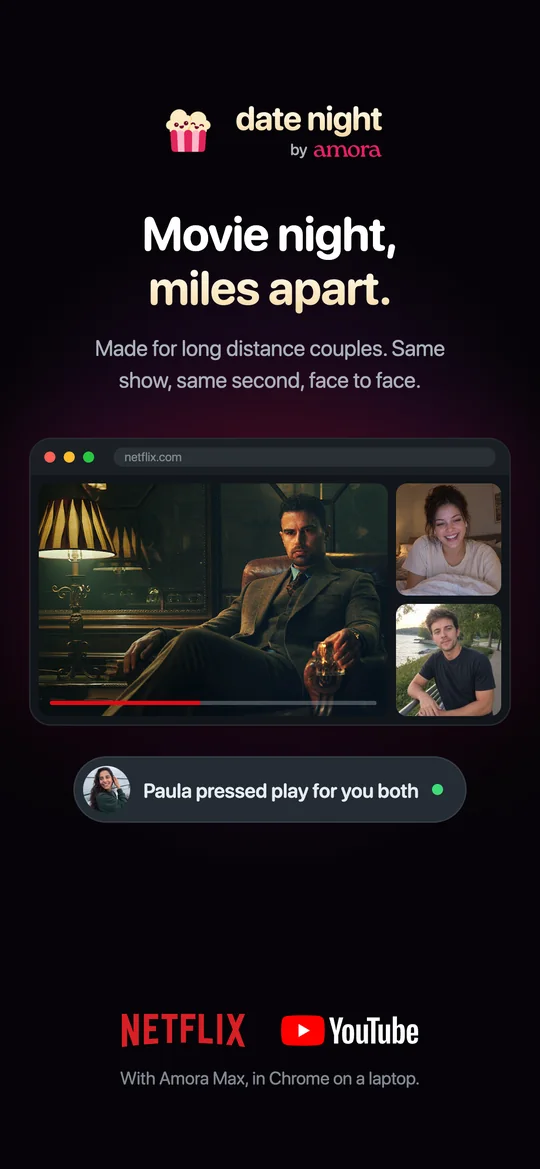
The weekly mini date is the tip couples drop first, usually because nobody knows what to do. Start with these 50 long distance date ideas, from cooking the same recipe to a movie night in sync.
If you want, start with just one question. One good conversation can change your day.
What would help you feel closer to me this week?
What fear comes up for you sometimes with the distance, and how can I help?
What 5-minute daily ritual can we do?
What gesture of mine gives you calm when you're far away?
Research & Sources
Jiang, L. C. & Hancock, J. T. (2013). Absence Makes the Communication Grow Fonder. Journal of Communication, 63(3), 556-577.
This Cornell University study found that long-distance couples can develop equal or even greater intimacy than geographically close couples. LDR partners tend to idealize their interactions more and engage in deeper self-disclosure, compensating for the lack of physical proximity.
Stafford, L. (2005). Maintaining Long-Distance and Cross-Residential Relationships. Lawrence Erlbaum Associates.
Research shows that long-distance couples who establish predictable communication routines and rituals report higher relationship satisfaction and trust than those who communicate sporadically.
If you are apart, start by agreeing how you want to communicate, share everyday moments and plan when to see each other again.
The key isn't just talking more. It's about intentional connection: quality conversations, shared experiences (even virtual ones), and maintaining emotional intimacy despite physical distance. For a daily habit across time zones, try Amora, a long distance relationship app built for two time zones.
Common Challenges
Time Zone Differences
Finding overlapping time to connect when you're 6, 9, or 12 hours apart requires planning and flexibility.
Missing Physical Touch
Physical affection is a fundamental human need. LDR couples must find creative ways to maintain intimacy.
FOMO & Jealousy
Not being part of your partner's daily life can trigger insecurity. Trust and communication are essential.
Different Daily Routines
When your lives don't overlap naturally, you have to be intentional about staying connected.
The "When" Question
Uncertainty about when you'll be together again is one of the hardest parts of long distance.
Communication Fatigue
Endless texting can feel like a chore. Quality matters more than quantity.
Expert Tips for Long Distance
Schedule your connection time
Treat video calls like real dates. Put them on your calendar and protect that time. Consistency matters more than duration.
Share the mundane moments
Don't wait for exciting news. Share the boring stuff, what you had for lunch, a weird thing you saw. It builds intimacy.
Have a countdown
Always have your next visit planned. Having something to look forward to makes the distance more bearable.
Create shared experiences
Watch movies together, cook the same meal, play online games. Virtual shared experiences create real memories.
Send physical surprises
A handwritten letter, a care package, or flowers can bridge the physical gap in ways digital messages can't.
Discuss the end game
Know what you're working toward. Whether it's months or years away, having a plan reduces anxiety.
Conversation Starters for LDR Couples
What's one thing you wish I could experience with you today?
If we could teleport to any place right now, where would we go?
What small thing reminded you of us this week?
What's been the hardest part about being apart lately?
If you could send me anything right now, what would it be?
What's something new you've learned about yourself since we've been long distance?
What's our next adventure going to be when we're together?
How can I support you better from here?
The daily question
What ten seconds of us would you replay if you could?
Yes. It works best when there are clear agreements, trust, and consistent connection habits.
What do we do when we argue over text?
If emotions are high, pause. Switch to a call or wait until you're calmer to avoid misinterpretation.
Can long distance relationships really work?
Yes, research shows LDR couples can have equal or higher relationship satisfaction than geographically close couples. Success depends on communication quality, trust, and having a plan for eventually closing the distance.
How often should long distance couples communicate?
Quality matters more than quantity. Most successful LDR couples find a balance that works for both, typically daily check-ins plus longer video calls 2-3 times per week. The key is consistency, not duration.
What are the biggest challenges in long distance relationships?
Common challenges include time zone differences, missing physical touch, dealing with loneliness, FOMO about your partner's daily life, and uncertainty about when you'll be together. Apps like Amora help by creating daily connection rituals.
How do you keep the spark alive in a long distance relationship?
Create shared experiences (watch movies together, play online games), send unexpected physical gifts, maintain intimacy through meaningful conversations, plan visits in advance, and use apps designed for couples to stay emotionally connected.
What percentage of long distance relationships succeed?
The cited material does not establish a universal success or relocation rate. Discuss your expectations, communication preferences and any plans to live closer.
Kai writes about modern relationships, long-distance couples, and the messy in-between space where Gen Z and millennial dating actually lives in 2026. Situationships, app burnout, healthy boundaries, and what to do when the old advice no longer applies.
“Tried a lot of couple apps before, but this is the first one that actually feels complete. There are so many little features that genuinely help us feel close, especially in LDR. My favorite part is daily questions and widgets 😍😍”
Sophieeeeee12May 2026 · App Store
🇩🇪Germany
“A wonderful App to stay connected, especially in a long-distance relationship. Also helpful to get to know your significant other better.”
baedamichiJuly 2026 · App Store
🇦🇺Australia
“My partner and I love this app, it’s so nice to learn more about each other through the app and all of the cute questions 🥰”
ShanniosMarch 2026 · App Store
🇦🇺Australia
“We aren’t long distance but we still use Amora everyday to bring us closer together”
dylanjsplattMarch 2026 · App Store
🇮🇩Indonesia
“User friendly interface, fast forward, has some unique features that other app doesn’t”
Handaru SteezMarch 2026 · App Store
🇺🇸United States
“Best couple app out there. Amora is great 👌🏻 I love the imagine feature”
ben.ekedahlMarch 2026 · App Store
🇪🇸→🇰🇷Spain → Korea
“It’s easy to use and I love that I can be in touch with him every day. It makes the distance easier to carry ✨”
María linasApril 2026 · App Store, translated
🇪🇸Spain
“The best app for a long distance relationship, really easy to use and the questions are the best!!”
LoreCristanchoMarch 2026 · App Store, translated
🇺🇸United States
“Tried a lot of couple apps before, but this is the first one that actually feels complete. There are so many little features that genuinely help us feel close, especially in LDR. My favorite part is daily questions and widgets 😍😍”
Sophieeeeee12May 2026 · App Store
🇩🇪Germany
“A wonderful App to stay connected, especially in a long-distance relationship. Also helpful to get to know your significant other better.”
baedamichiJuly 2026 · App Store
🇦🇺Australia
“My partner and I love this app, it’s so nice to learn more about each other through the app and all of the cute questions 🥰”
ShanniosMarch 2026 · App Store
🇦🇺Australia
“We aren’t long distance but we still use Amora everyday to bring us closer together”
dylanjsplattMarch 2026 · App Store
🇮🇩Indonesia
“User friendly interface, fast forward, has some unique features that other app doesn’t”
Handaru SteezMarch 2026 · App Store
🇺🇸United States
“Best couple app out there. Amora is great 👌🏻 I love the imagine feature”
ben.ekedahlMarch 2026 · App Store
🇪🇸→🇰🇷Spain → Korea
“It’s easy to use and I love that I can be in touch with him every day. It makes the distance easier to carry ✨”
María linasApril 2026 · App Store, translated
🇪🇸Spain
“The best app for a long distance relationship, really easy to use and the questions are the best!!”
LoreCristanchoMarch 2026 · App Store, translated
Amora is perfect for long distance
A daily question + shared memories + widgets. All private to just the two of you.

 Kai Park
Editor, Modern Relationships